





WWW.AQWGY.NET
Mathematics Culture Week
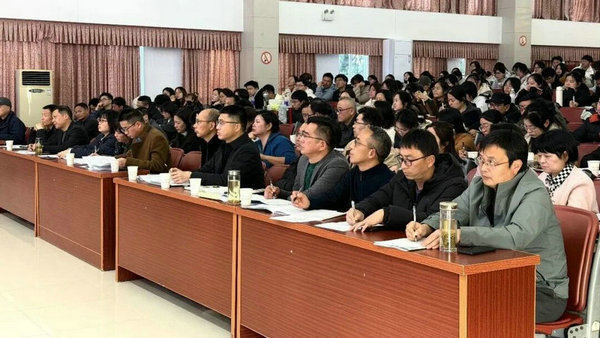
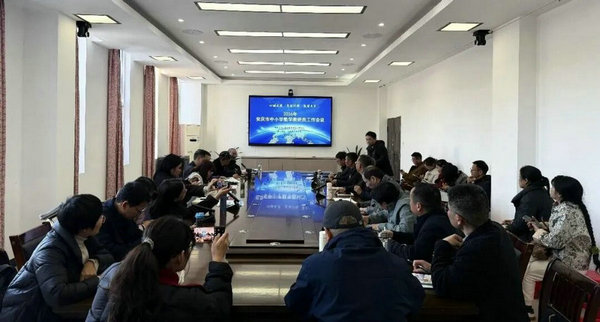
On the afternoon of March 12th, 2026, the 2026 mathematics teaching and research activity of Anqing City was held in our school. Mathematics teaching and research personnel from the Anqing Municipal Teaching and Research Office, teaching and research offices of various counties (cities, districts), and 160 teachers and students from the School of Mathematics and Physics of Anqing Normal University gathered at Anqing Foreign Language School in the bright March to enjoy a feast of ideas where traditional Chinese culture and mathematics interwove.
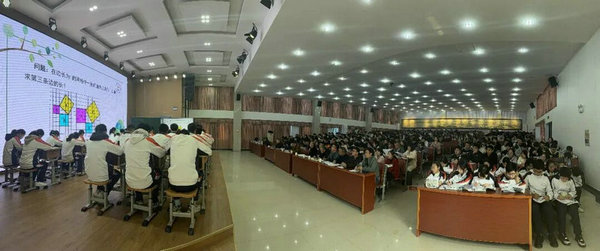
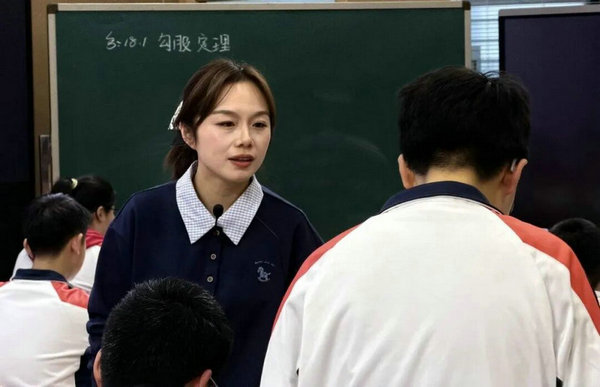
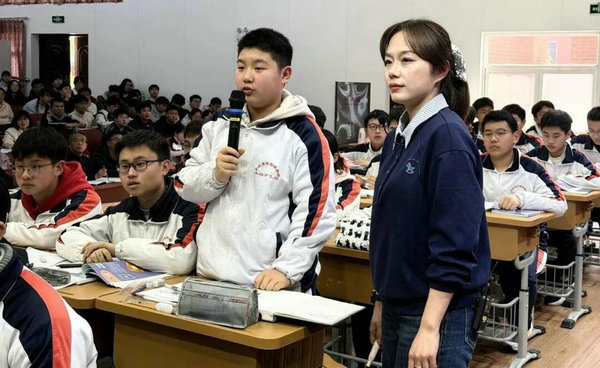
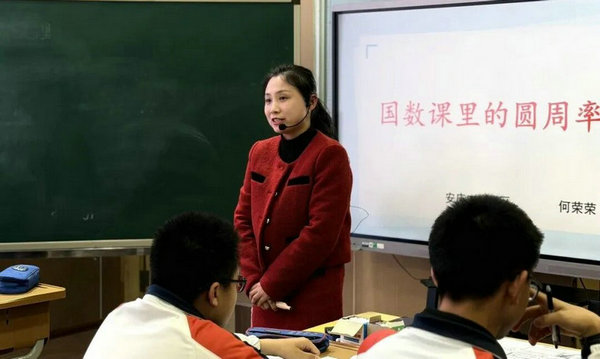
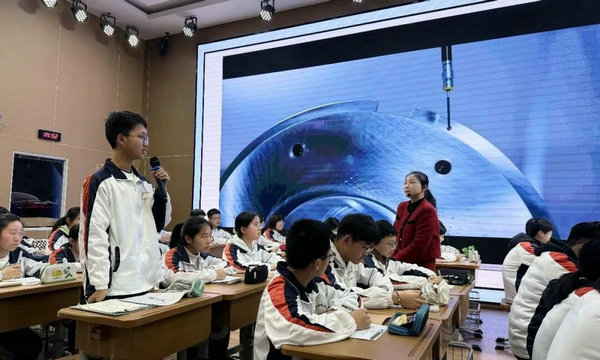
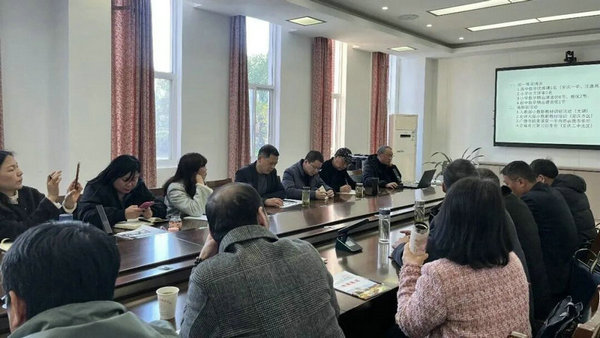
First and foremost, teacher He Rongrong from the South Campus of Anqing No. 2 High School and teacher Wang Yue from the Junior High School Department of our school have ingeniously interwoven the essence of Chinese culture with the spirit of mathematics, presenting two outstanding research lessons. These two lessons, with culture as their wings, have enabled the mathematics classroom teaching to break free from the mold of problem-solving and become a fertile ground for nurturing rational thinking and cultural confidence. For instance, teacher Wang Yue's seminar lecture, 'Rooting in National Confidence and Exploring the Pythagorean Theorem', began with the ancient record in 'Zhou Bi Suan Jing' stating 'Gou (3) - Fu (4) - Chi (5)', allowing students to experience the warmth of ancient Chinese mathematics during the theorem derivation process, and perceive the profoundness of national wisdom through logical reasoning, thus achieving a cognitive elevation from 'knowing what it is' to 'knowing why it is' and then to 'knowing how it is'.
What's more, teacher He Rongrong's 'The Pi Culture in the Mathematics Class of China' followed the 'Squaring the Circle' method of Zu Chongzhi as the main thread, connecting the exploration history of pi in both Eastern and Western cultures: from the classical wisdom of Liu Hui's 'dividing it more finely, the deviation becomes smaller', to the modern Monte Carlo experiments that use probability and statistical thinking to approximate pi. Also, through calculations, tracing the origin, and experimental verification, students could understand that mathematics is not just cold formulas, but also a common language of human civilization, a spiritual dialogue that transcends time and methods.
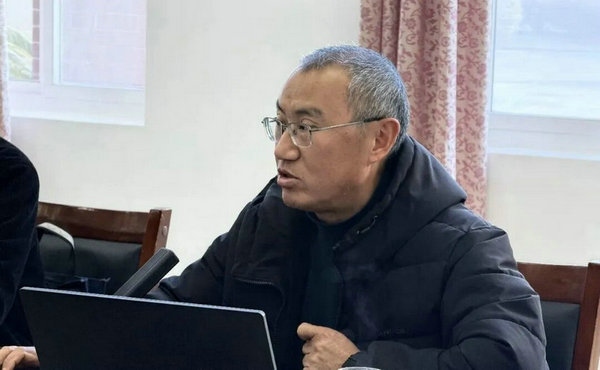
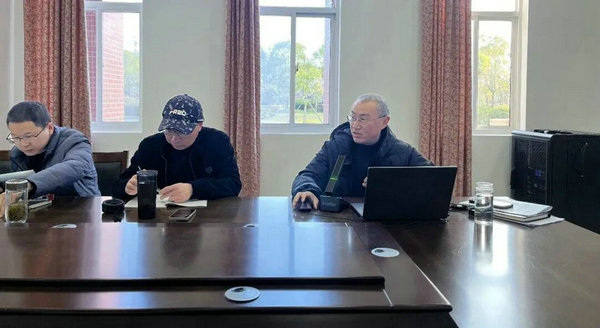
Furthermore, during the observation of the classes, we could appreciate the ingenious design of the classroom teaching. In the meantime, during the discussions, ideas could be sparked off. To be concrete, Director He Chengquan of the Mathematics Research Office in Anqing City highly praised the two classes, pointing out that both classes accurately grasped the core essence of 'cultivating students' mathematical literacy through mathematics culture', integrating the excellent traditional Chinese culture with the cultivation of core mathematical competencies, which not only maintained the rational nature of the mathematics discipline but also endowed the classroom teaching with profound humanistic depth, providing a vivid sample for how mathematics classes can 'inculcate through culture and educate through numbers'. Accordingly, currently, in teaching, we should focus on both techniques and the integration of culture, allowing students to establish a complete mathematical cognitive system through 'knowing the origin, knowing the flow, and knowing the application'.
Subsequently, Director He Chengquan delivered a speech titled 'Reviewing Achievements, Facing Challenges, and Looking Forward to the Future', in which he comprehensively reviewed the mathematics teaching and research work in Anqing City in 2025, using detailed data to summarize the achievements of the teaching and research work in the past year, and proposing plans and prospects for the 2026 teaching and research work, and clearly defining the key points and directions for next year's teaching and research work.
In a nutshell, from the ancient wisdom of the Pythagorean theorem to the thousand-year quest for pi, from the micro-practice in the classroom to the long-term goals of educational research, this grand event used mathematics as a bridge to connect the cultural roots and educational missions. More remarkably, the light of reason illuminates the inheritance of culture, injecting more lasting strength into the high-quality development of mathematics education in Anqing City.
CORYRIGHT © 2011 WWW.AQWGY.NET. ALL RIGHTS RESERVED